
Migration Scenario
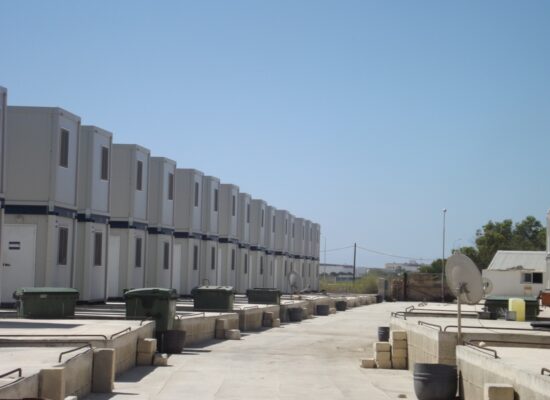
Irregular Immigration Scenario in Malta
BACKGROUND
Migration and asylum issues are handled by several ministries, including:
- Ministry for Home Affairs, Security and Employment (MHSE): Responsible for reception, asylum determination, returns, and failed asylum seekers.
- Ministry for Foreign Affairs (MFA): Oversees external aspects of irregular immigration and asylum policy.
Key departments under MHSE include:
- Armed Forces of Malta (AFM): Maritime surveillance and rescue.
- Malta Police Immigration Section: Border control, SIRENE unit, and Eurodac system.
- Detention Service: Manages closed centres.
- International Protection Agency (IPA)
- Malta Immigration Appeals Board (IAB) Information.
- AWAS: Manages open centres and provides welfare services
Key Principles Guiding Malta’s Actions
- Safeguarding security through effective border control.
- Ensuring fair and humane treatment of migrants and asylum seekers.
- Expediting asylum claim determinations.
- Supporting integration for beneficiaries of protection.
- Facilitating intra-EU relocation and resettlement.
- Promoting voluntary returns and repatriation of irregular migrants.
- Enhancing cooperation with third countries.
Border Control and Search and Rescue (SAR)
Malta prioritizes safety at sea and fulfils its international obligations for rescuing persons in distress. The AFM coordinates SAR operations within Malta’s SAR Region (20,577 km²). Since inception, Malta has rescued over 15,000 migrants and facilitated their disembarkation.
DETENTION
Fair, just and humane treatment of migrants and asylum-seekers :
- Immigrants who reach Malta irregularly are subject to administrative detention
- Vulnerable persons, including minors, are not detained
- Detention period was of up to 18 months (subject to periodic review) for irregular immigrants and up to 12 months for asylum-seekers, now it is of maximum three weeks, unless special circumstances prevail.
- Upon release from detention, migrants are transferred to open accommodation centres
- Malta seeks to provide the best conditions possible for persons in detention centres and those residing at open centres
ASYLUM PROCESS
Expeditious determination of asylum applications:
Third country nationals (TCNs) who express their intention to make an application for asylum in Malta are informed to contact the Office of the Refugee Commissioner. Such TCNs are provided with information about the asylum procedure and assisted to fill in the registration form by this same Office.
- As part of the asylum procedure, a personal interview conducted by the Office of the Refugee Commissioner is held with each applicant.
- The decision of the Refugee Commissioner may be appealed before the Refugee Appeals Board and free legal aid may be provided
- Until a final definitive decision has been given by the Board, the appellant is entitled to remain in Malta
- Third-country nationals (TCNs) seeking asylum must contact the office of the IPA to lodge their application.
- Applicants undergo personal interviews and are informed of their rights and procedures.
- Decisions can be appealed before the IPAT, with free legal aid available.
For more information about the Office of the Refugee Commissioner, click here.
RIGHTS OF BENEFICIARIES OF INTERNATIONAL PROTECTION
Beneficiaries are entitled to:
- Employment, social welfare, housing, education, and medical care.
INTRA-EU RELOCATION AND RESETTLEMENT
Malta participates in EU relocation and resettlement programs to help alleviate pressures linked to its geographical position. The first pilot project for intra-EU relocation from Malta, known as EUREMA (Pilot Project for Intra-EU Re-allocation from Malta), was launched in 2009 under the European Refugee Fund (ERF) to assess the feasibility of relocating beneficiaries of international protection to other EU member states.
RETURNS
Expeditious repatriation of irregular immigrants, including failed asylum-seekers :
- Malta encounters difficulties in the repatriation process to certain countries of origin
- The main difficulty is that of obtaining the necessary travel documents. The lack of cooperation from certain migrants complicates and lengthens the repatriation process
- In this context Malta is both promoting voluntary return, complete with reintegration packages, and insisting on the need to ensure return of those irregularly present who do not opt for voluntary return
CONCLUSION
Irregular migration and asylum require a comprehensive approach. Malta balances border control, relocation, resettlement, and repatriation while maintaining human rights and dignity.

