
History
What is AWAS? What is its function? How does it operate? These are just a few of the questions one would be prone to asking when searching for information on the Agency.
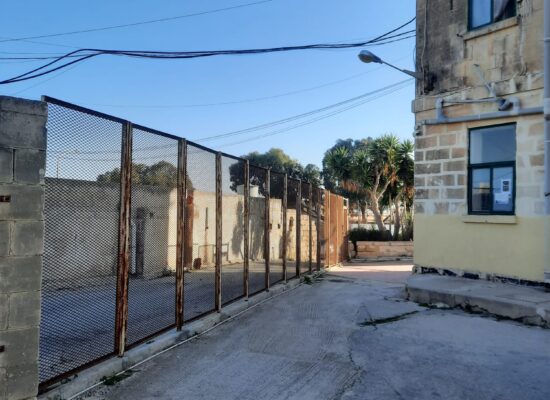
The need for an organization to address the welfare of asylum seekers first emerged around 2002, when a significant number of irregular migrants began arriving on Malta’s shores. This marked the beginning of sustained arrivals of migrants from Africa. At that time, prolonged detention was the standard response, as there was no established plan to relocate migrants from detention centres to open centres.
In 2003, MFSS (Ministry for Family and Social Solidarity) partnered with Conservatorio Vincenzo Bugeja, utilizing part of its property, Dar is-Sliem, to accommodate unaccompanied minors under the Care Orders Act. This project was funded through ERF (European Refugee Fund). Later, the cabinet delegated the responsibility for integration and welfare of migrants to MFSS.
In 2004, MFSS collaborated with the Franciscan Friars to use part of their property for accommodating unaccompanied minors at Dar is-Sliem II. However, later, the centre began hosting families and was renamed Dar il-Qawsalla. Following this, Agenzija Appoġġ established the Refugee Services Area (RSA), which was tasked with running an open centre at Ħal-Far and assessing unaccompanied minors and other vulnerable individuals.
In early 2005, the government issued a new policy on immigration during the National Conference on Immigration. By September of the same year, MFSS and Suret il-Bniedem repurposed the former Marsa Trade School into an open centre. Subsequently, the Ħal-Far Tent Village (HTV) opened in April 2006, followed by Dar il-Liedna in October 2006.
In February 2007, the Organization for the Integration and Welfare of Asylum Seekers (OIWAS) was informally established, with its first offices located at Block C, Belt is-Sebħ. By March 2007, OIWAS assumed responsibility for all refugee services previously managed by Agenzija Appoġġ, including the operations of the Ħal-Far Open Center (HOC) and HTV. The organization was officially launched in June 2007. Later that year, the Closed Centres Program was introduced, supported by EU funding under the COPE Project.
In February 2008, a new centre for single women, the Ħal-Far Refugee Centre (HFRC), was opened. By April 2008, responsibility for issues concerning irregular migrants, refugees, and individuals under humanitarian protection was assigned to the Ministry of Justice and Home Affairs.
In 2009, the Agency for the Welfare of Asylum Seekers (AWAS) was formally established as a government agency under Legal Notice 205 of 2009, issued under the Immigration Act (Cap 217). AWAS operates as a corporate body under the Ministry for Home Affairs and National Security in compliance with S.L.420.06 Amended by: L.N. 417 of 2015.
Today, AWAS, headquartered with a staff of over 220, manages 4 reception centres that house residents who have either received protection status or are awaiting the outcome of their asylum claims. The agency also oversees the guardianship of unaccompanied minors (UMAS).
Legal Notice 205 of 2009
In carrying out its functions, the Agency shall:
1. Oversee the daily management of accommodation facilities, either directly or through subcontracting agreements.
2. Provide specialized services to vulnerable individuals identified according to current policies.
3. Deliver information programs to clients on employment, housing, education, health, and welfare services available under national schemes.
4. Act as a facilitator with public entities to ensure refugees and asylum seekers can access services in line with national obligations.
5. Promote government policies and initiatives related to resettlement and assisted voluntary returns.
6. Maintain data and compile reports relevant to its functions while providing statistics to support policymaking bodies.
7. Advise the Minister on new developments in its field of operation, recommending policies or legislation to enhance services and meet legal obligations toward its service users.
8. Encourage collaboration with local voluntary organizations to improve service standards and foster academic research.
9. Partner with other public stakeholders and, when possible, extend its services to asylum seekers housed in reception centres outside its direct responsibility.

